Criminal Cases and Plea Bargaining

There are plenty of cases where an individual is charged with several different crimes and were they only end up being convicted of one or two of them. There are also cases where a defendant will receive a reduced sentence in exchange for pleading guilty to a crime rather than costing the state expense of a trial. This is called plea-bargaining and is something a criminal attorney will sometimes advised that their clients attempt.

Plea-bargaining means working with the prosecution to determine if there is an acceptable arrangement under which they may seek a reduced sentence for you or under which they may drop some of the charges pending against you. For example, if you get pulled over for a DUI and are found to also be in possession of illegal drugs and a firearm, you could feasibly be facing at least three separate charges. The prosecution may agree to drop some of the minor charges in exchange for you pleading guilty to the more serious charges or, in some cases, only the most serious of all the charges.

There are also cases where entering a plea may cause the prosecution to be inclined to argue on your behalf for a more lenient sentence. If you are convicted of a DWI, for instance, and have no other criminal convictions and haven’t even been in trouble with the law at any point during your life, the prosecution may recommend that you are given a lighter sentence because they don’t regard you as a particular threat to society. The amount of plea-bargaining you can do will depend upon the severity of the charges against you. If the charges are very minor, there may even be cases where you can enter into a plea bargain that will end up in a significant charge being completely dismissed from the case.

How to Appeal a Conviction

Your attorney may advise that you appeal a conviction if it is obvious that you were treated unfairly during a trial or that there was some sort of incompetence involved in your defense. The process starts by filing a notice of appeal. This is a form that you get from the court. In some cases, you can also get them from other locations. You simply fill out the form and bring it back to the court within 10 days. There’ll be a fee involved in filing for an appeal. It can be substantial, so make sure you ask how much you will need beforehand.

After you have filed your notice and made your payment, you have to file a motion that details the reasons why you are appealing your conviction. This is something your attorney will put together for you. If you have a new attorney, they will put together the appeal for you.

After your motion to appeal has been filed, you’ll receive a court date. This should happen fairly quickly. There may be other forms that you need to file to complete the process. If you have an attorney’s help, they will take care of this and make sure that your forms are all filed and that you’re ready to go when your court date comes around. If you’re doing this yourself, make sure that you pay attention to the details of what is required of you.

If you’re too late to file your appeal, you may have to go before a district court judge to get permission to file. Make sure you check how much time you have, but it will usually be 10 days. If you’re filing all this paperwork yourself, be sure to ask someone else for assistance if you don’t understand something that is required or question that is being asked.

Alabama Holds Highest Rate of Prescription Narcotic Use

While the United States makes up only 5% of the worlds population, it is attributed to consuming almost 80% of all opioid drugs.

Unfortunately, Alabama is one of the biggest contributors to this issue. According to Express Scripts, Alabama ranks at the top of the list for highest rate of use and fifth-highest costs of prescription narcotics in the country. The study found that while the national average of prescriptions filled per person a year in 2010 was 0.67, Alabama today stands at 1.17 prescription filled per person a year.

In a perfect world. the high use could be associated with excellent patient care and legitimate medical treatment. In the real world, the numbers suggest that Alabama has a major problem with the misuse of prescription drugs. This is considered by health professionals as “illegal diversion,” meaning that the drugs are being used to get high, not for treatment.

In any case, with high rankings come national attention. Police agencies in Alabama are going to be looking to restore their reputation and crack down of prescription drug use.  With added emphasis comes high arrests and the compulsion of prosecutors to make examples of misguided or innocent citizens. Don’t let this happen to you. If you or someone you know is being accused of illegal drug use make sure you have the right legal representation on your side. Whether justice for you means receiving a fair sentencing with professional help or the acquittal of all your charges, research a good Criminal Defense Law Firm near you today.

Being Detained vs. Being Arrested


Welcome to BirminghamCriminalLawyer.net, To get us started here we are going to clarify what the difference is between being detained and being arrested.

There are some areas of the law where the exact definitions of words are not clear. The areas of the law that surround the concept of being detained are one such area. An officer may detain you if they suspect that you are involved in the crime but they’re not arresting you for it yet. For example, if they find you in somebody’s yard in the middle of the night and you have no good reason why you should be there, they may detain you for a few minutes to check to see if you have warrants out or to investigate what’s going on. When they detain you in this way, you are generally not free to leave on your own.

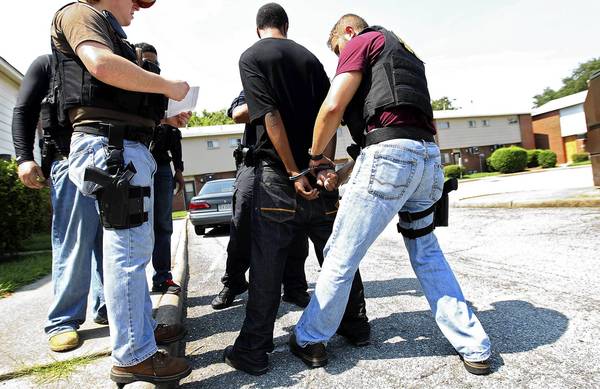
When you are arrested, you are formally being charged with a crime. This means you are absolutely not free to leave on your own and that you will likely be booked, searched for weapons and kept in custody for a time. You may also have to pay bail to get out of custody before you are brought before a judge. Being detained is not this formal. Oftentimes, the severity of being detained depends upon exactly what the circumstances surrounding it are.

For example, if you are nearby when a minor altercation happens, the police officers that show up to break it up may want to detain you for a few minutes to ask you what happened. You’re not being arrested but you are expected to wait until the officer gives you permission to leave. If you are being detained, it’s always acceptable to ask the officer if you may leave or whether they intend to charge you with a crime or not. Agencies other than law enforcement can detain you, as well. As an example, if you are caught shoplifting at a store, the store security may detain you until the officers arrived to arrest you.